









What is a Non-Warrantable Condo?
Read more




Low down payment and low rate home loan options for Seattle
Monday - Sunday | 8:00 am - 8:00 pm
We will never rent, sell, or misuse your data, ever.
A Division of City Mortgage Brokers, LLC
MB#2158059

Refinancing your home in Seattle can save you thousands or cost you thousands, depending on what you catch before closing.
The difference usually comes down to eight avoidable mistakes, and each one does the same thing: inflating the total loan cost on your closing disclosure, the document that spells out every fee you're paying to refinance.
That figure, more than the rate, is what decides whether a refinance was worth doing at all. It’s also the one almost nobody checks.
The reason is simple.
Lenders lead with the rate because that's the number people react to, so that's how quotes get compared.
Which means the total loan cost sits further down the page, is easy to skim past, and causes borrowers to pick what they think is the lowest interest rate, even though they’re paying more than they had to.
Below are the eight mistakes that push that number up, along with what you can do instead.
Most people shop for a refinance by collecting quotes from different mortgage lenders and picking the lowest rate. But what's often missed is that rates change daily. The rate that made you pick a lender today might be a lot higher by the time you actually sign.
Annual percentage rate (APR) is the fairer comparison.
It takes the fees a lender charges and includes them in the rate, so one number reflects what you're really paying.
To get a real feel for what a refinance costs to execute, find line D on your loan estimate or closing disclosure. That line is labeled total loan costs, and it adds up sections A, B and C. These are what many people refer to as closing costs.
A good practice is to compare that figure across every quote you’re thinking about entertaining before you commit.
It's unfortunate, but many borrowers take the one home loan they're offered and assume that's the deal.
Thankfully, it isn't.
The loan term, the structure, and the escrow account can all be adjusted to fit your goals.
For example, you can take a lower monthly payment, or you can keep paying what you pay now and let the lower interest rate shorten the loan instead.
In an ideal scenario, a loan officer asks first, then builds the loan around your answer.
It’s not uncommon for borrowers to forget to mention something that can affect their eligibility.
It could be that you started a new job six weeks ago, or forgotten tax lien that didn’t cross your mind.
During the underwriting process, it will be found anyway and likely have a negative effect on the process.
Some potential consequences can include the loan getting rewritten or denied, or having your closing date moved.
On a refinance, that delay is expensive.
That's why closings get timed to the end of the month. You prepay interest on the new loan from your closing date through the end of that month, and your first mortgage payment isn't due until the first of the month after that. Move your closing date from the 29th to the 3rd, and you've added almost a month of prepaid interest to your cash at closing.
The key takeaway is to tell your mortgage broker everything in your first conversation.
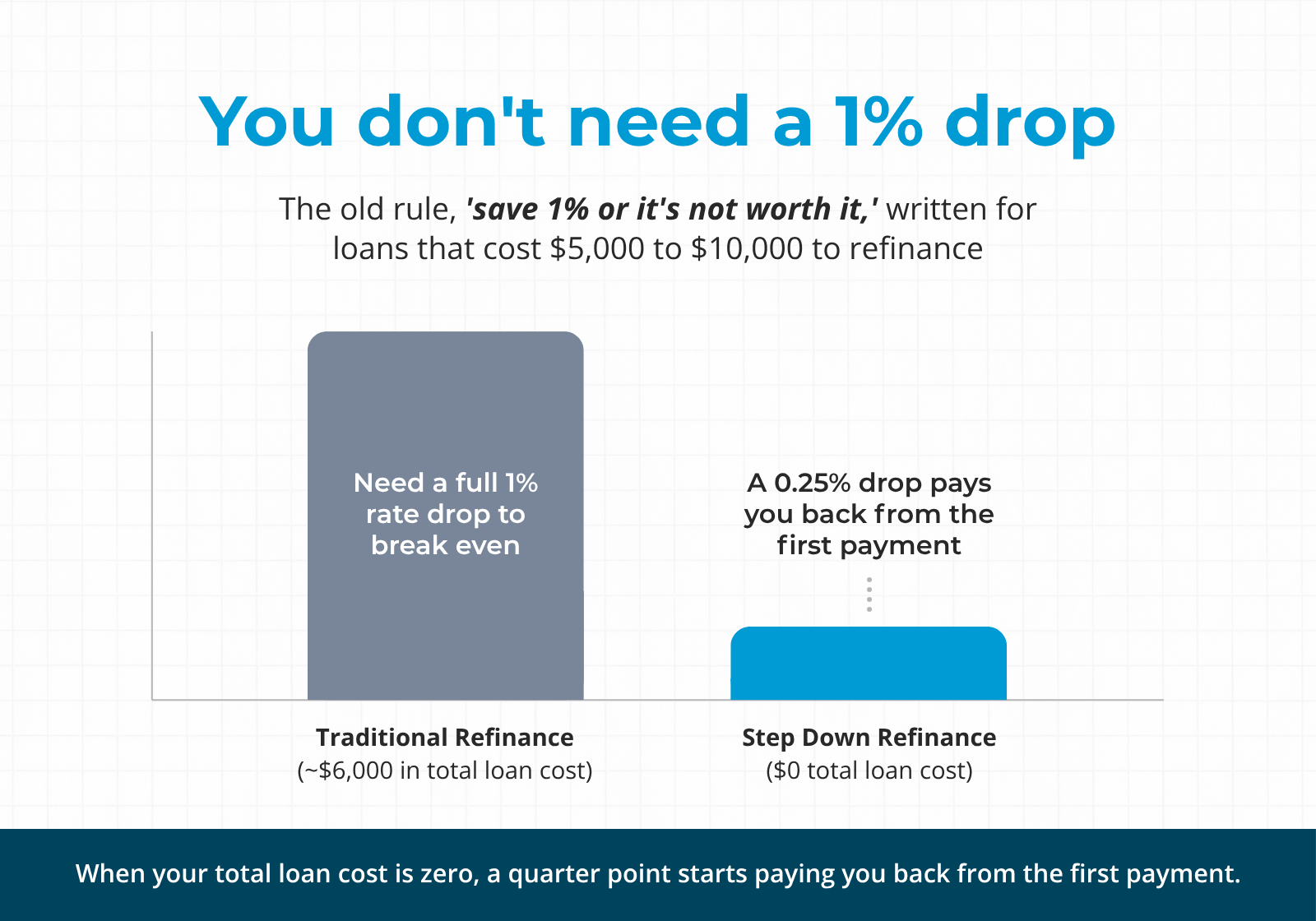
Waiting for the perfect rate is market timing, and nobody wins that game consistently. Every month you hold out, you pay the difference between your current interest rate and the one available today. Watching mortgage rates obsessively doesn't close that gap; refinancing does.
Homeowners wait because they've heard you need to save a full percentage point for a refinance to be worth it.
But that rule came from an era when refinancing cost five or ten thousand dollars upfront. And a cost that size demands a big drop in your interest rate to earn it back.
The mistake is applying that rule to a refinance that doesn't cost anything. If your lender credit covers your closing costs, there's nothing to earn back, and a quarter-point drop in mortgage rates starts paying you from the first payment.
Your score sets your rate, and your rate sets your payment for years.
So naturally, it's worth a closer look before anyone locks anything in. Along with loan to value, it's one of the biggest inputs to your pricing.
If a loan officer pulls your credit and the number comes back lower than you expected, that's not a dead end. You are well within your rights to request to see the full report.
Credit reports can carry mistakes more often than most people realize, and many times they can be fixed quickly.
Things like a paid collection still showing a balance, a card reporting the wrong limit, or an account that was never really yours can be corrected and nudge you into better pricing.
Before you sign anything, ask yourself how much longer you plan to be in this house.
If you're moving in a few years, take the lower payment and enjoy it.
If you're staying put, there's a better move.
Keep paying what you pay now, let the lower rate shrink the loan instead, and you could potentially knock years off the back end without changing your budget at all.
This also helps you decide if discount points are worth it. You only earn that money back by staying in the loan, and if you plan to refinance again when rates drop, you might not stay long enough to break even.
A good broker asks how long you're staying before quoting you a rate.
It's easy to spend an afternoon comparing quotes and never take a second to look into the company handing them to you.
But there's one question that will tell you exactly what you need to know about who you’re working with: what will my total loan costs be, and what's getting added to my balance?
In order for it to be considered a good answer, the response should come back as a number. Particularly line D on your loan estimate and your payoff amount sitting next to the new loan amount.
When those two match, with nothing rolled in and your equity wasn't chipped away to pay for the loan, you can breathe a sigh of relief.
If their answer is "we'll cover that at closing," that's worth taking note of.
Despite popular belief, getting approved isn't the finish line.
Your credit, income and payment history get verified again shortly before closing, not just during the application process.
That means opening a credit card, financing a car, changing jobs, or missing a mortgage payment while the file is in process sends it back to underwriting.
So before you do any of these things, have a quick conversation with your mortgage broker to ask what to avoid before the process comes to an end.
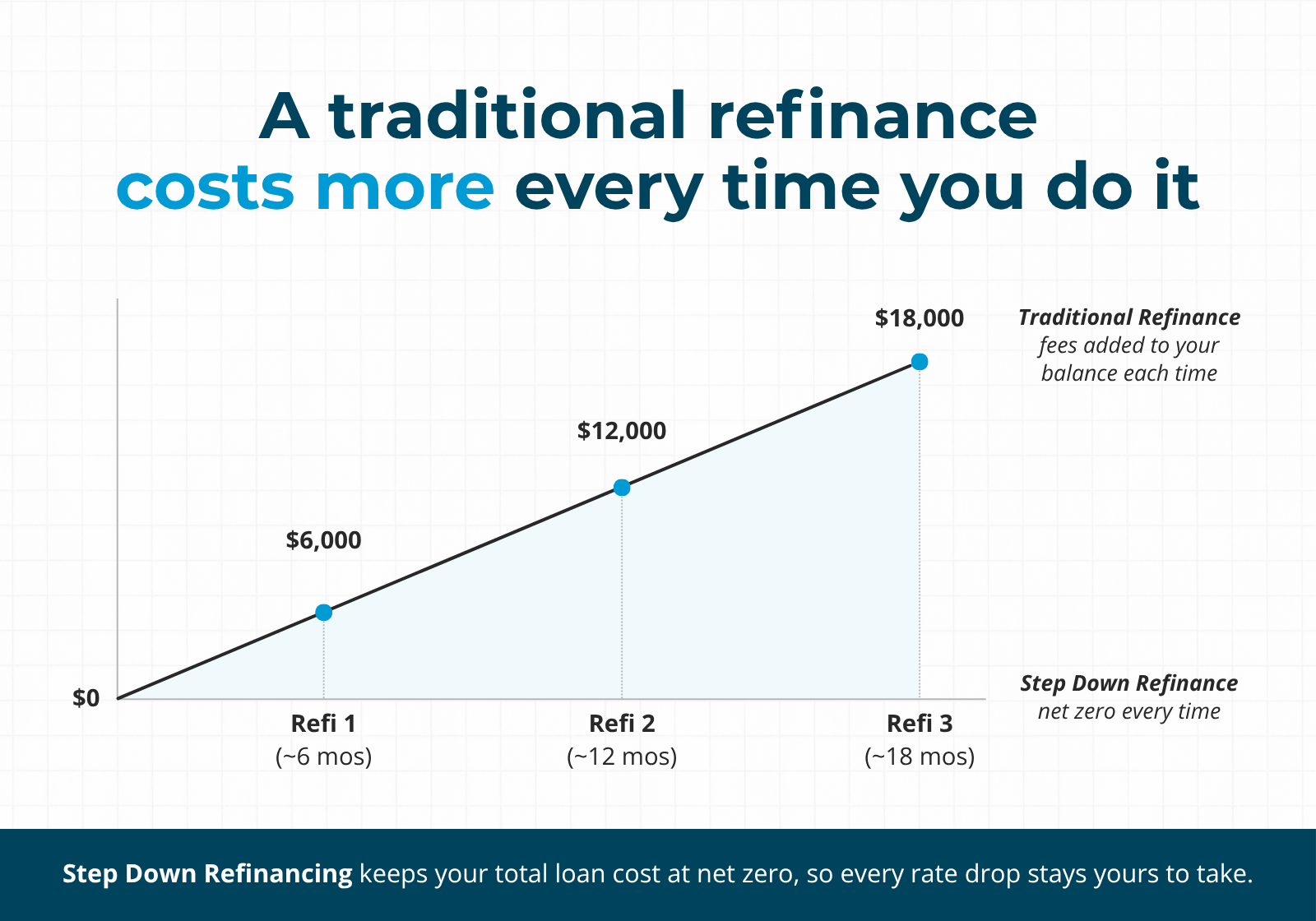
Every mistake on this list ends up on the same line of your closing disclosure, the form your lender gives you before you sign. That line is your total loan costs, and it adds up everything the refinance costs you, including your appraisal, title, processing, and lender fees.
On a typical refinance, it lands somewhere between five and ten thousand dollars.
So your savings have to climb past that number before the loan is worth doing. This means that although a lower payment may feel like a win right away, you're still in the hole by the full amount you paid at closing until the monthly savings add up to it.
If you don't have that cash, most lenders add those costs to your balance instead. Meaning your loan gets bigger, so the next refinance starts from a higher bar. So even when rates drop six months later, you can't justify moving because you're still paying for the last one.
Seattle’s Mortgage Broker’s Step Down Refinance Program was designed to take that cost off your plate, so the next drop stays available to you.
Here's how it works.
The lender pays us a commission for placing your loan, and we put that toward the standard fees on Line D of your closing disclosure. Make six on-time payments, and you're eligible to refinance again, then every six months after that, for as long as you own the home.
That means every drop in rates is yours to take, not a decision about whether the fees are worth it.
Most of these eight mistakes aren't really about you. They're about who you hand your file to.
The right mortgage broker is the safeguard between you and every mistake on this list. They ask how long you're staying before recommending a term. They go through your credit report with you instead of just pulling it. They tell you not to open a new card before you apply, because they know what it does to your file two weeks later. Every one of those is a mistake caught before it reaches your closing disclosure, and that's where the real value shows up on your end.
The wrong one prices your loan and lets you find out the rest at closing. That's the risk, and it follows you for the life of the loan.
Request a refinance quote from Seattle's Mortgage Broker and see your total loan costs before you commit to anything. That number tells you whether the refinance makes sense.
Joe Tafolla is the founder and lead mortgage broker at Seattle’s Mortgage Broker, a full-service mortgage consulting firm dedicated to helping homebuyers secure financing with competitive rates, faster closings, and personalized service.
With more than two decades in the mortgage industry, Joe has helped hundreds of families achieve homeownership.